


Sign up for the daily CJR newsletter.

In August, Chris Quinn, the editor of the Cleveland Plain Dealer, announced that the paper would no longer endorse candidates in Ohio’s Senate and governor’s races. The decision came after Quinn, who sends a daily text message to more than four thousand subscribers, asked those readers if they still found value in endorsements. The respondents overwhelmingly said they did, but with a caveat: they wanted less focus on high-profile contests—for the US Senate or the governor’s seat—and more information and perspective on downballot races.
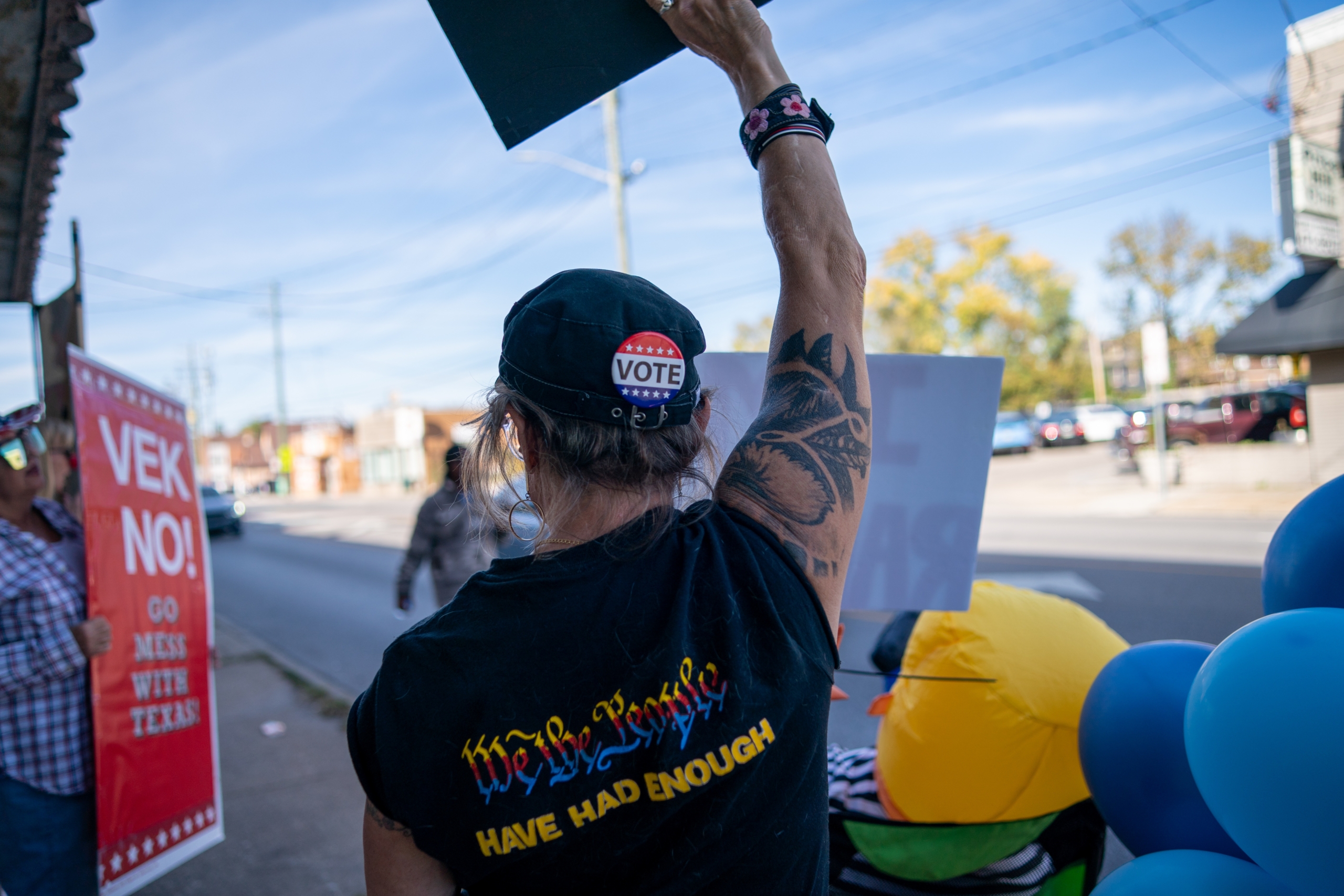
But this week, the Plain Dealer rightly reversed course, endorsing Amy Acton, the Democratic gubernatorial candidate, and denouncing Vivek Ramaswamy, her Republican opponent, for releasing an appalling attack ad featuring Donna Arthur, Acton’s mother, accusing her daughter of being a “liar” who “lies about her past.” (Acton has been estranged from Arthur for nearly fifty years; her mother had stood by Acton’s stepfather when he was charged with raping Acton, who was then twelve.)
In a piece, “We cannot remain silent: Amy Acton for governor,” the Plain Dealer’s editorial board explained its decision. “There are moments when a community must decide what it stands for, when its institutions have a duty to speak and when silence itself becomes a statement. Ohio has reached such a moment,” they wrote. “Our politics have been debased for a decade, but this we will not accept. A candidate who uses childhood sexual abuse as a weapon against the person who endured it has crossed a line that Ohioans should defend, whatever their party. We are better than this. We have a responsibility to show it.”
Quinn told me that readers began reaching out almost immediately after the ad came out, urging the Plain Dealer to weigh in. “The ad took people’s breath away because you talk about how low can we go in American politics? For people this time, this went beyond what is too low,” he said. “The readers want us to stand for something. They felt like this changed the rules, that the policy we formed was perfect for a horse race, but this is no longer a horse race. This is a moral decision.”

On Monday, Democrats on the House Judiciary Committee released a report examining Donald Trump’s alleged ties to Jeffrey Epstein and his sex trafficking operation. The findings contained allegations against Trump from eleven women, ranging from abuse to rape. The most significant account comes from Beatrice Keul, a former Miss Switzerland, who the report says “credibly alleges that Trump violently raped her at a November 1993 pageant at the Plaza Hotel in New York City and that Epstein, Trump, and others used this pageant as a ‘hunting ground’ to prey on vulnerable young women and girls.” Some of Keul’s story had already been reported, but not the brutality of the encounter, which she described as having left her bleeding and bruised. (The Trump administration has denied wrongdoing, saying the president “has been fully exonerated of anything related to Epstein.”)
Details about a credible rape allegation against a sitting president—especially one who was found civilly liable for sexual abusing E. Jean Carroll just three years ago—might seem like a story that would get a lot of attention. And yet major news outlets have given it remarkably little coverage. (I’ll pause to note a few exceptions: Time, the Miami Herald, People, and TMZ.) “The lack of coverage reflects a kind of numbness to this,” Judd Legum, who covered the report and Keul’s allegations on Popular Information, his Substack, told me. “You can imagine that with virtually any other candidate, if something like this emerged, it would be a much bigger deal.”
Keul’s name has not appeared in the New York Times, the Washington Post, or the Wall Street Journal this week, based on my search. Nor could I find mentions of her on ABC’s, CBS’s, NBC’s, or CNN’s sites. (A short Times piece about the report, characterizing it as “written by Democratic staff aides” and asserting that it “largely cites allegations that have already been public,” made no reference to its previous coverage describing Keul “withholding some details of what happened because she had been subject to anonymous threats.”)
It’s hard to know why so many news organizations minimized or neglected the disturbing revelations in the report, but the silence creates an impression that the Trump administration’s efforts to intimidate the press have been effective in making some newsrooms more reluctant to scrutinize Trump’s history of sexual misconduct and ties to Epstein. As Legum put it when we spoke, the “Trump communication apparatus has successfully worked the refs on this.” In February, Trump declared in a testy exchange with Kaitlan Collins in the Oval Office that it was time for the country to move on from the Epstein files. It appears he’s getting his wish, at least when it comes to allegations directed at him.
In the final stretch of the midterms, grift has emerged as an animating force. A majority of Americans now say they are more concerned about corruption than any other issue, according to recent polls from Fox News and CNBC. That shift is due, in part, to the incredible work of journalists across newsrooms, who have documented the many ways Trump, his family, and his administration have enriched themselves since his reelection.
To document the scope of the profiteering, Isaac Saul, the executive editor of Tangle, has set out to catalogue all of it. His first piece came out in May. “The president is profiting off the office and making foreign policy decisions based on business interests to a level we’ve never seen or even conceived of before,” he wrote, “and apparently nothing is being done to stop it.” Last week, he published a follow-up, noting that “as astonishing as it was seeing it all together, even as the person who wrote it, the excesses of the five months since are almost unfathomable.”
“I started tracking a lot of the corruption and self-enrichment and self-dealing because it is a genre of story that offends my sensibilities,” Saul told me. “I spent a lot of time writing about things like Hunter Biden during the Biden administration, and then Trump comes into office and immediately starts doing things, and his children start doing things, and his cabinet starts doing things, at a scale that I think objectively was way bigger and more obvious and more alarming and more offensive than the sorts of stuff we were talking about during the Biden administration. And I wanted to communicate that to my audience.”
In his latest piece, Saul lists, among other things, ten stories that have broken just in the past three weeks, including the shutdown of an investigation into insider trading related to Trump’s Iran policy and oil prices, deals made with donors to the White House ballroom project, and apparent bribes to MAGA Inc. and other Trump-aligned super PACs.
“In the time between that first piece and this piece, the story became a lot more potent for voters, and it feels like people are paying much closer attention to it,” Saul told me. “The scale of it and the brazenness of it does matter. It’s almost offensive to any thinking person.”
If you have a suggestion for this column, please send it to laurelsanddarts@cjr.org. We can’t acknowledge all submissions, but we will mention you if we use your idea. For more on Laurels and Darts, please click here. To receive this and other CJR newsletters in your inbox, please click here.
Has America ever needed a media defender more than now? Help us by joining CJR today.