

Sign up for the daily CJR newsletter.
In 1990, a chance encounter in the office elevator changed the trajectory of Razia Iqbal’s career. She was then a subeditor at the BBC on a six-month contract. Days later, she was on a flight to Pakistan as the BBC’s foreign correspondent, after the position had been vacated at short notice. It was supposed to be a quiet stint. But shortly after she arrived, Benazir Bhutto, Pakistan’s prime minister, was dismissed from office, prompting a political crisis, and Iqbal, who had no experience as a broadcaster, found herself providing rolling coverage on television and radio for the BBC World Service’s global audience.
Iqbal never looked back. Across the next thirty years, she became one of the BBC’s most ubiquitous and successful journalists. She worked as a foreign correspondent in Sri Lanka during the civil war in the 1990s; as the anchor for BBC Newshour, the channel’s flagship radio show on current affairs; and as an arts journalist. She left the BBC in 2023 and is now a visiting professor at Princeton University; she also serves on the editorial board of The Nation.
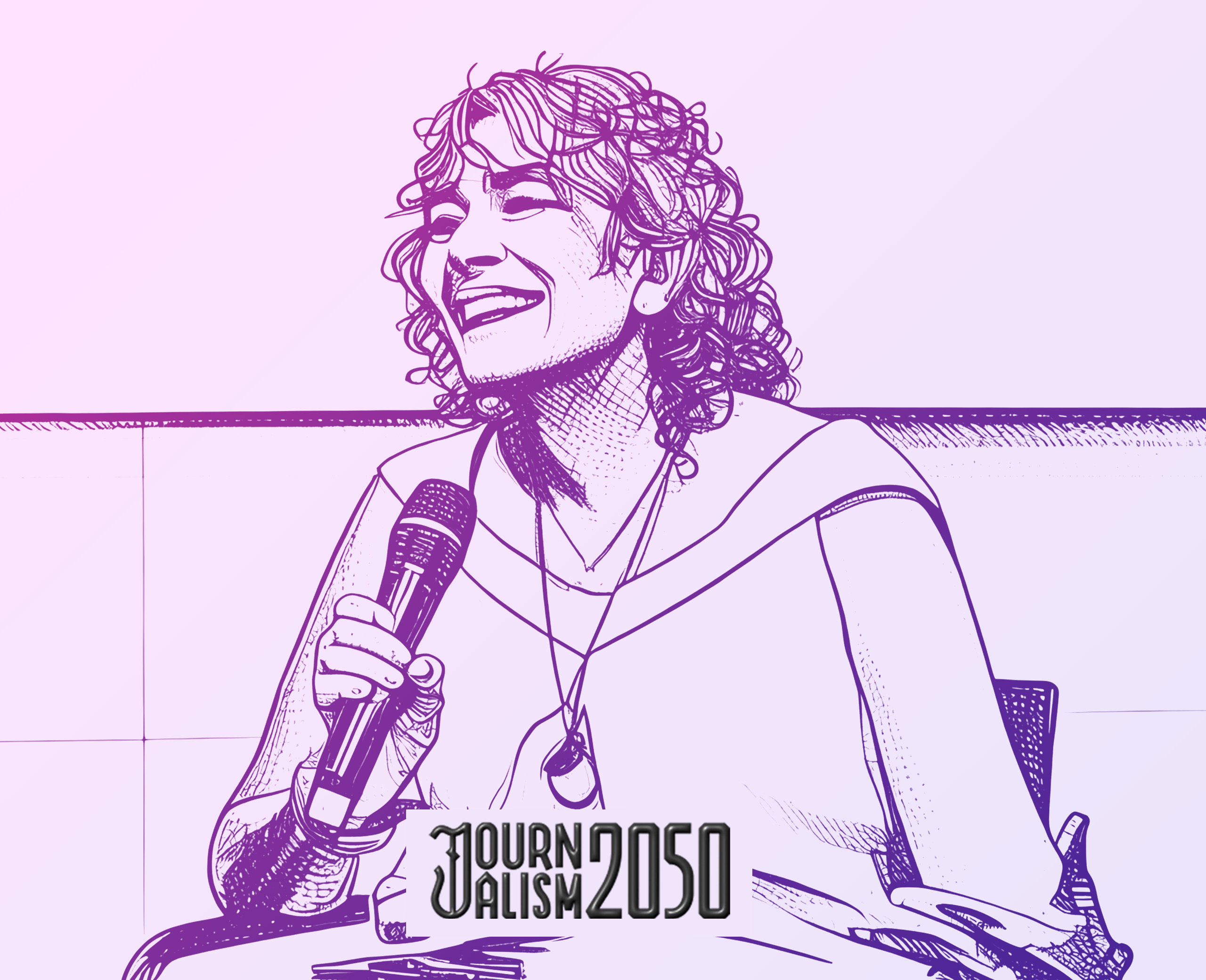
In this episode of Journalism 2050, recorded live at Zeg, a storytelling festival held this past June in Tbilisi, Iqbal reflects on her career and the state of journalism in conversation with cohosts Emily Bell and Heather Chaplin. Since the 1990s, Iqbal has had a front-row seat not just to world events but also to the transformation of the journalism industry. “I feel like we are in a clarifying moment where you need to take a stand, if you believe in journalism,” she says. “I still only just believe in journalism.”
Credits:
Producer: Sarah Myles
Research: Samuel Earle
Production assistant: Hana Joy
Art: Katie Kosma
Music: Henry Crooks
Has America ever needed a media defender more than now? Help us by joining CJR today.